Source 360 degree rotatable gimbal spotlight for Engineering, Home Furnishing, and Decoration
Compare 30 listings for the 360 degree rotatable gimbal spotlight featuring adjustable beam angles and multiple CCT options. Buyers can evaluate specifications like CRI, lifespan, and smart dimming support across suppliers in Guangdong and Jiangsu.
Key considerations
Products List




Comprehensive Sourcing Guide
Strategic Sourcing Guide for 360-Degree Rotatable Gimbal Spotlights
The global market for architectural lighting has seen a significant shift toward flexible, high-performance illumination solutions, with the 360-degree rotatable gimbal spotlight emerging as a critical component for modern interior design. These fixtures are engineered to provide precise directional control, allowing light to be adjusted horizontally and vertically to highlight specific architectural features, artwork, or workspaces. For B2B procurement professionals, sourcing these units requires a disciplined approach that balances technical performance, regulatory compliance, and supply chain reliability. The following guide outlines the essential factors buyers must evaluate when sourcing 360-degree rotatable gimbal spotlights, drawing on observed market data and technical specifications to ensure informed decision-making.
Technical Specifications and Optical Performance
When evaluating the core technical attributes of a 360-degree rotatable gimbal spotlight, buyers must prioritize the optical engine and mechanical adjustability. The primary function of these fixtures is to deliver high-quality light with minimal glare, which is achieved through specific lens and reflector designs. Observed market data indicates that high-performance units often utilize COB (Chip on Board) LED sources, such as Epistar or Osram chips, which are known for their thermal stability and consistent color output. The Color Rendering Index (CRI) is a critical metric; reliable products in this category typically offer CRI values ranging from 80 to 97, with Ra > 90 being the standard for premium applications where color accuracy is paramount.
The Color Correlated Temperature (CCT) flexibility is another vital specification. Buyers should verify that the product supports a wide range of tunable white options, commonly observed in the range of 2700K to 6500K, or specific discrete steps such as 3000K, 3500K, 4000K, and 5000K. This versatility allows the lighting to adapt to different environments, from warm residential settings to cool commercial corridors. Furthermore, the beam angle is a decisive factor in the fixture's utility. The optical system, often involving optical lenses, should offer selectable beam angles such as 15°, 24°, 38°, and 50° to accommodate various mounting heights and spread requirements. The luminous efficacy, often cited around 120 Lm/W, and total luminous flux, which can range from 600lm to 2400lm depending on the wattage, determine the energy efficiency and brightness of the unit.
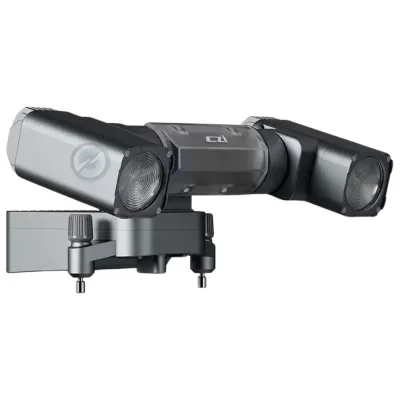
Mechanically, the "gimbal" aspect refers to the dual-axis rotation capability. While the keyword implies 360-degree rotation, the physical implementation usually involves a swivel mechanism that allows for significant horizontal and vertical adjustment. The housing material is predominantly aluminum, chosen for its superior heat dissipation properties, which is essential for maintaining the lifespan of the LED driver and the light source. The diffuser, typically made of tempered glass or polycarbonate, plays a crucial role in glare control and light distribution. Buyers must ensure the diffuser is compatible with the specific optical lens to prevent light leakage and ensure a clean beam profile.
Compliance and Certification Verification
Navigating the regulatory landscape is a non-negotiable aspect of B2B procurement. The safety and electromagnetic compatibility of lighting fixtures are governed by strict standards that vary by region. In the European market, the CE mark is mandatory, often accompanied by specific directives such as EMC (Electromagnetic Compatibility), LVD (Low Voltage Directive), and RoHS (Restriction of Hazardous Substances). Observed product data confirms that compliant units frequently carry these certifications. Additionally, for markets like Australia, the SAA certification is required, while the Middle East often mandates SASO compliance. In China, the CCC (China Compulsory Certification) is a standard requirement for domestic and export products.
Buyers must not rely solely on the presence of a certification logo but must verify the scope of the certification. For instance, the standard "aluminum+TG" mentioned in product specifications refers to the material composition and coating standards, which must be verified against local building codes. The IP Rating is another critical compliance factor, particularly for installations in damp or dusty environments. While specific IP ratings vary, the input voltage range of 100-240V AC is a standard global specification that ensures compatibility with various power grids. Procurement teams should request valid test reports from accredited laboratories to confirm that the product meets the claimed EMC and LVD standards, as these are often the first points of failure during customs clearance or safety inspections.
Cost Drivers and Pricing Dynamics
The pricing structure for 360-degree rotatable gimbal spotlights is influenced by a complex interplay of factors, including component quality, certification scope, and order volume. The observed price range in the market spans from $2 to $17,950, a wide variance that reflects the difference between basic residential units and high-end, custom-engineered commercial systems. The lower end of the spectrum typically corresponds to standard models with basic optical performance and standard packaging, while the upper end includes units with premium drivers, advanced dimming capabilities, and specialized finishes.
The Minimum Order Quantity (MOQ) is a significant cost driver, with observed ranges from 1 to 2000 units. Buyers seeking to minimize inventory risk may find suppliers offering low MOQs, though this often comes with a higher unit price. Conversely, bulk procurement can significantly reduce the cost per unit but requires careful demand forecasting. The customization level is another major cost variable. While customization is generally available, options such as custom packing (e.g., Neutro-Packing or Exported Standard Carton Box), specific beam angles, or proprietary branding will incur additional charges. The choice of LED chip, such as Osram versus Epistar, also impacts the final cost, with premium brands commanding a higher price point due to their superior longevity and color consistency.
Typical Applications and Installation Requirements
The versatility of 360-degree rotatable gimbal spotlights makes them suitable for a diverse array of applications. In residential settings, they are frequently used for home furnishing, providing accent lighting for living rooms, bedrooms, and kitchens. The recessed installation method is the most common, requiring precise ceiling cutouts that align with the fixture's housing dimensions. The standard lamp installation method, often a screw holder or plug lamp configuration, dictates the wiring requirements and the ease of maintenance.
In commercial and engineering contexts, these fixtures are essential for highlighting architectural details, retail displays, and gallery spaces. The ability to adjust the light direction allows designers to create dynamic lighting scenes that change with the time of day or specific events. The usage categories observed in the market include rooms, tunnels, and general decoration, indicating their adaptability to both indoor and semi-outdoor environments. The input voltage of 100-240V ensures that these fixtures can be deployed in various global locations without the need for complex voltage conversion systems. However, buyers must verify the specific installation requirements, such as the need for a junction box or specific thermal clearance, to ensure a safe and code-compliant installation.
Supplier Evaluation and Quality Control
Selecting the right supplier is as critical as selecting the right product. The supply chain for these fixtures is concentrated in specific manufacturing hubs, with Guangdong and Zhongshan in China being prominent origins. Buyers should evaluate suppliers based on their production capacity, quality control processes, and ability to meet delivery schedules. The observed lead times and production standards, such as "aluminum+TG," should be verified against the buyer's specific project timeline.
Quality control should extend beyond the final product inspection to include the verification of raw materials and component sourcing. For instance, the use of high-quality aluminum for the housing and tempered glass for the diffuser should be confirmed through material certificates. The lifespan of the fixture, often cited as 30,000 to 50,000 hours, is a key performance indicator that should be backed by accelerated life testing data. Buyers should also assess the supplier's warranty terms, with 3 years being a common standard in the industry. A robust warranty indicates the supplier's confidence in their product's durability and their commitment to after-sales support.
Long-Term Procurement Considerations
Sourcing 360-degree rotatable gimbal spotlights is not merely a transactional activity but a strategic decision that impacts the long-term performance and maintenance costs of a lighting project. The smart dimming capabilities, including support for protocols like DALI, Tuya, 0-10V, Triac, and Casambi, are becoming increasingly important for integration into building management systems. Buyers should ensure that the selected fixtures are compatible with their existing or planned control systems to avoid costly retrofits.
The availability of spare parts and the longevity of the product are also critical considerations. With a lifespan of up to 50,000 hours, the fixtures are designed for long-term use, but the driver and LED source may eventually require replacement. Suppliers that offer comprehensive technical support and a clear supply chain for replacement components add significant value to the procurement process. Additionally, the environmental impact of the product, including the recyclability of materials like aluminum and the compliance with RoHS standards, should be factored into the sustainability goals of the project. By focusing on these long-term factors, buyers can ensure that their investment in 360-degree rotatable gimbal spotlights delivers consistent performance and value over the life of the installation.
Comparative Analysis of Product Attributes
To facilitate a clearer understanding of the variations available in the market, the following table summarizes key attributes observed across different product models. This comparison highlights the diversity in specifications that buyers must navigate during the sourcing process.
| Attribute | Model SL-CL5Q | Model WD-GIM-LND1422-7W | Model YH-DL-001 | Model K2023A |
|---|---|---|---|---|
| Origin | Guangdong, China | Zhongshan, Guangdong, China | Changzhou, Jiangsu, China | N/A |
| Material | Aluminum | Aluminum | Aluminum | N/A |
| CRI (Ra) | >90 | 80, 90, 97 | N/A | N/A |
| Lifespan | 50,000h | N/A | 30,000h | N/A |
| LED Source | N/A | Epistar COB | Osram | N/A |
| Diffuser | Tempered Glass | N/A | Polycarbonate | N/A |
| Beam Angle | N/A | 15°, 24°, 38°, 50° | N/A | N/A |
| Smart Dimming | N/A | N/A | N/A | DALI, Tuya, 0-10V, Triac, Casambi |
| Certification | CE, EMC, LVD, RoHS, SAA, SASO, VDE | CE, EMC, LVD, RoHS | EMC, LVD, CE, CCC | N/A |
| Packing | General Box | Customized / Neutro | Exported Standard Carton | N/A |
This table illustrates that while core functions remain consistent, the specific configuration of components, certifications, and smart features varies significantly between models and origins. Buyers must carefully match these attributes to their specific project requirements to ensure optimal performance and compliance.
FAQs
What certifications are required for 360 degree rotatable gimbal spotlight exports?
Products typically carry CE, RoHS, EMC, and LVD certifications for global compliance. Additional standards like SAA, SASO, or CCC may apply depending on the target region. Buyers must verify specific test reports to ensure regulatory acceptance in their local market.
How does the CRI value affect light quality in these fixtures?
High CRI values ranging from 80 to 97 ensure accurate color rendering for detailed work. Premium applications often require Ra greater than 90 to maintain true color representation. The specific CRI level depends on the LED source and optical design selected.
Which installation methods are supported for recessed mounting?
Recessed installation is the standard method, utilizing screw holders or plug lamp configurations. The housing is typically made of aluminum for heat dissipation. Buyers should confirm cutout dimensions and thermal clearance requirements before installation.
Can these lights support smart dimming protocols like DALI or Tuya?
Yes, many models support smart dimming via DALI, Tuya, 0-10V, Triac, and Casambi protocols. This allows integration with building management systems for precise control. Compatibility depends on the specific driver and model selected for the project.
What is the typical lifespan of LED chips in these units?
The lifespan ranges from 30,000 to 50,000 hours depending on the LED source quality. Premium chips like Osram or Epistar COB offer superior thermal stability. This longevity reduces maintenance costs over the life of the installation.
How does the beam angle influence the lighting application?
Selectable beam angles such as 15, 24, 38, and 50 degrees allow for precise directional control. Narrower beams highlight specific features while wider beams provide general illumination. The choice depends on the mounting height and desired light spread.
What materials are used for the housing and diffuser?
Housings are predominantly aluminum for efficient heat dissipation. Diffusers are typically made of tempered glass or polycarbonate to control glare. These materials ensure durability and compliance with safety standards for long-term use.